A 0-to-1 internal platform that turns employee ideas into tracked, implemented action
Good ideas existed everywhere — but had no place to go
Hesai Technology's 800+ employees had no formal channel to surface process improvements. Ideas were shared informally via chat, then lost or forgotten.
Management had no visibility into which suggestions were submitted, under review, or implemented — leading to duplicated effort and missed opportunities.
Without a system, there was no accountability. Employees stopped suggesting because nothing seemed to happen.
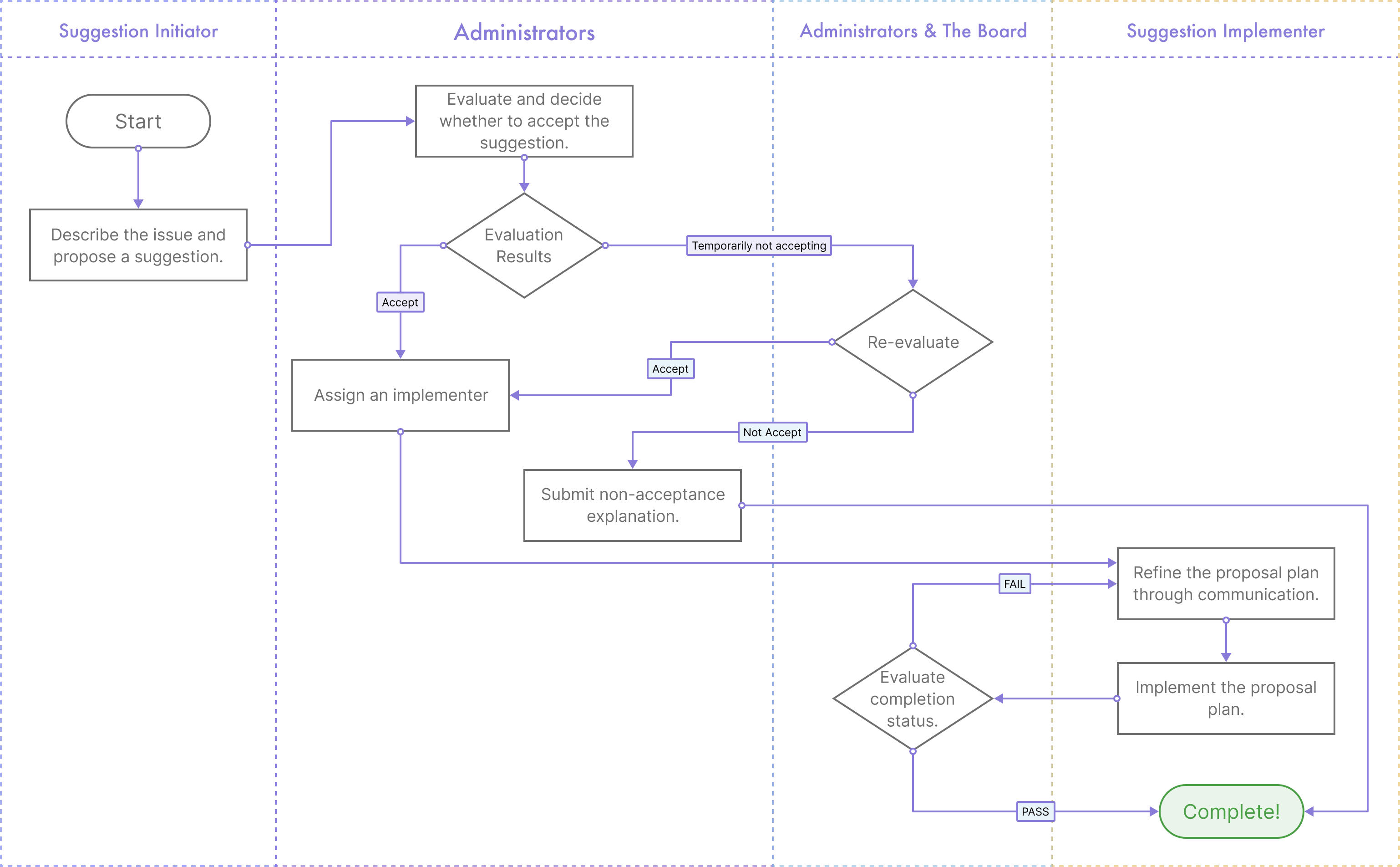
Understanding the suggestion lifecycle
Transparency is the core need
Users didn't need a fancy interface — they needed to know their idea was received, reviewed, and acted on.
Admins are the bottleneck
Without clear tooling, admin workload scales linearly with submission volume. The system needed to reduce their cognitive load.
Implementers are forgotten
Existing processes skipped directly from approval to completion — implementers had no dedicated workflow.
A platform for the full suggestion lifecycle
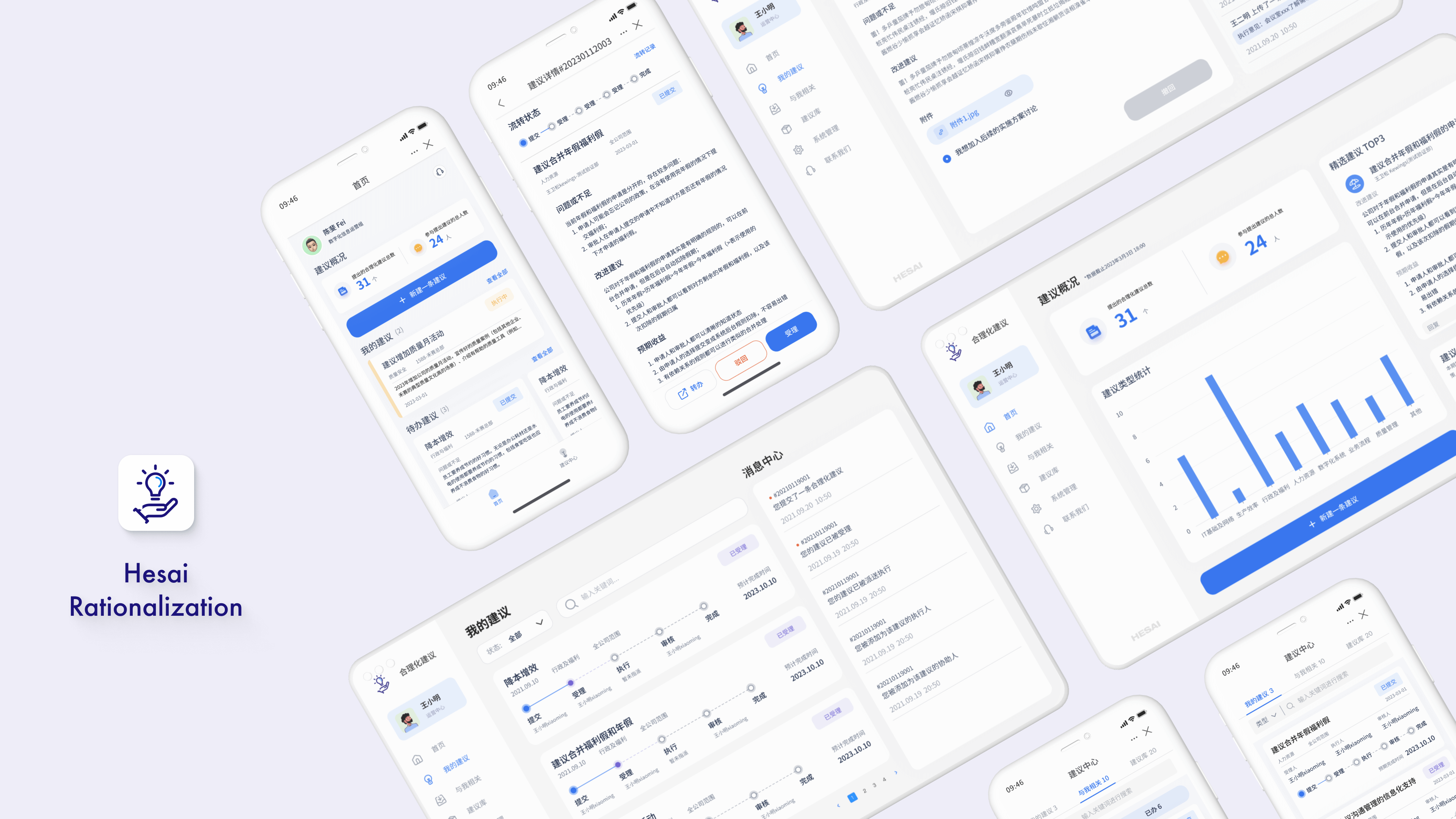
Three distinct interfaces — one for each role — unified under a single system. Every suggestion has a traceable journey from submission to resolution.
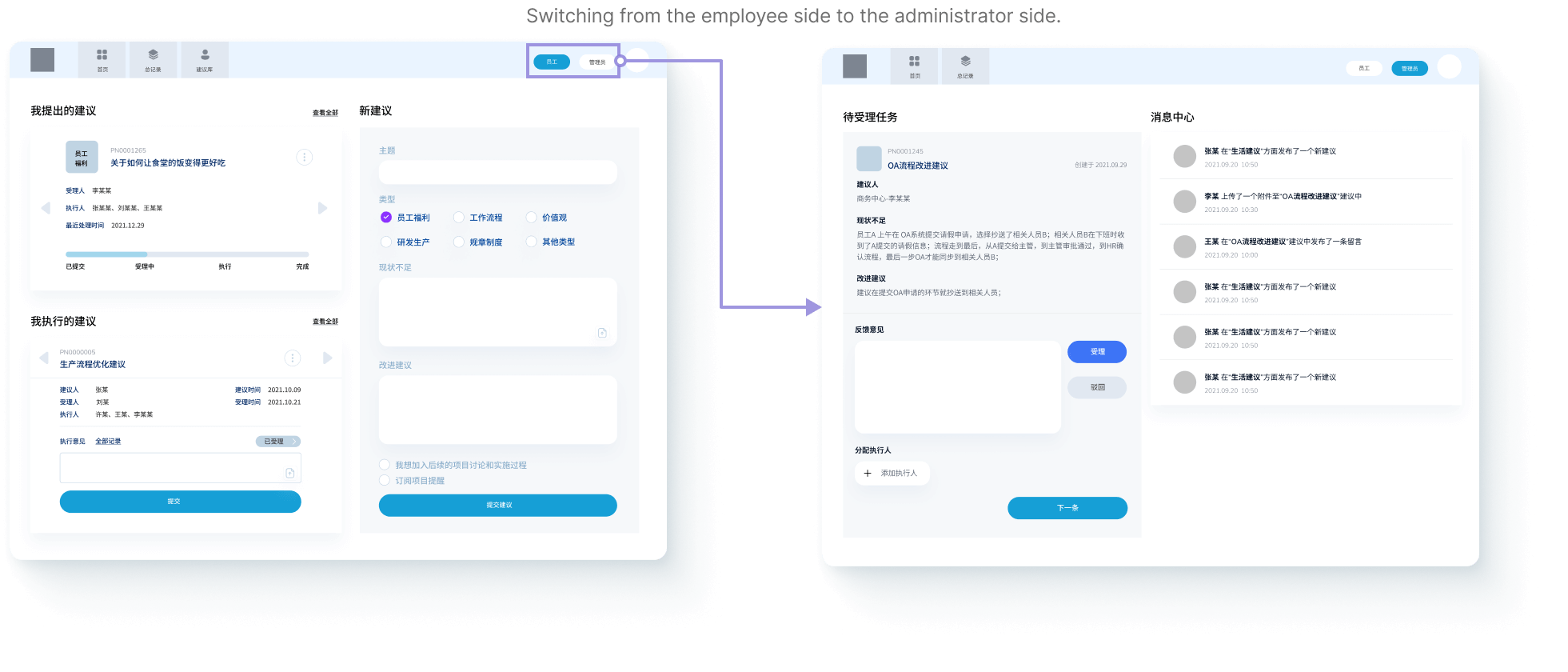
Users manually switch between roles to see different views. Tested with 12 users — felt confusing and context-switching was disruptive.
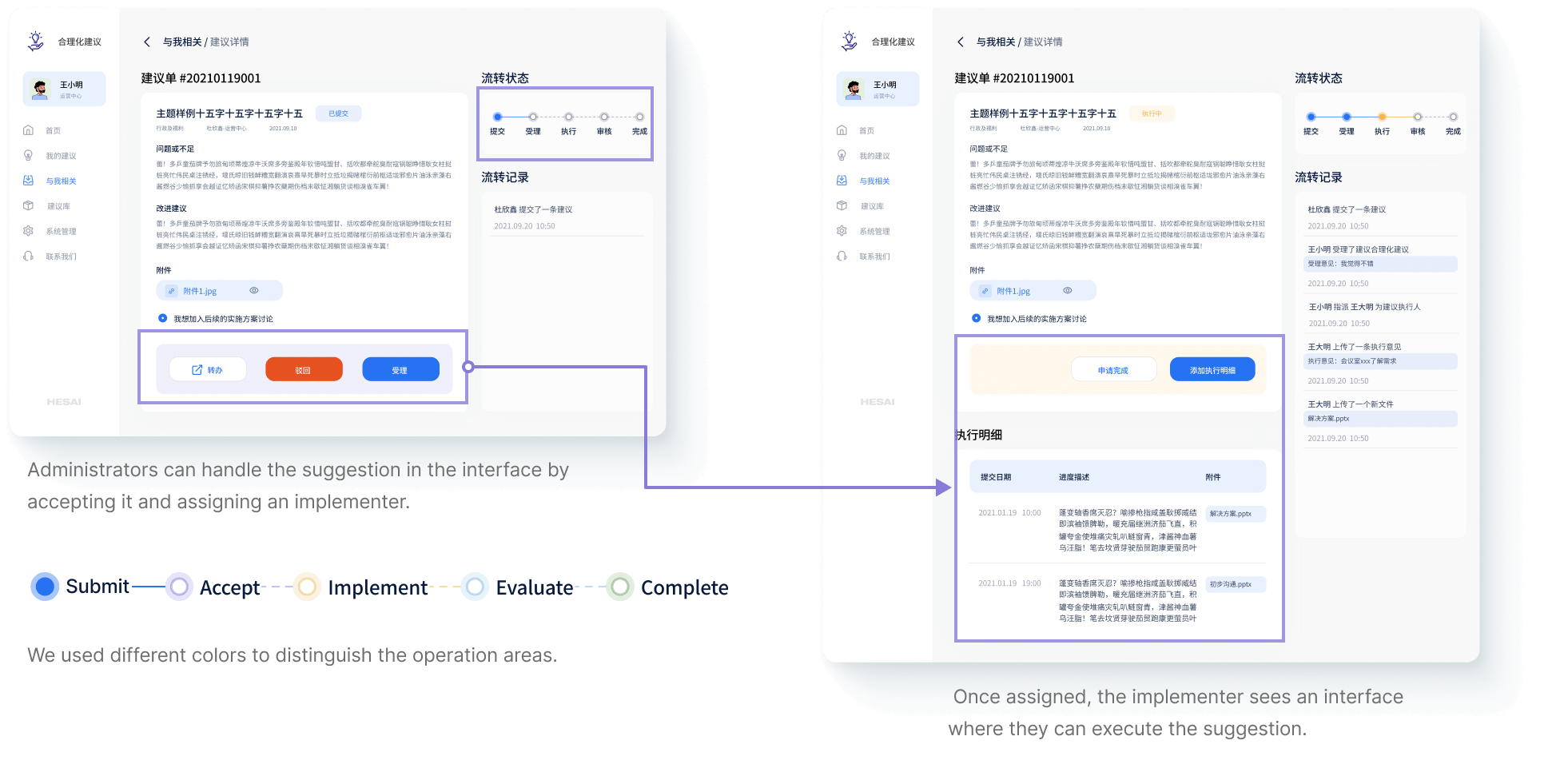
Interface adapts to the suggestion's current status. Users always see what action is relevant — no switching required. Preferred by 10 of 12 testers.
Two interface approaches, one clear winner
We debated between manual role-switching and a workflow-driven interface. Testing with 12 employees showed status-based views were more intuitive for tracking suggestion progress.
Three roles, three purpose-built views
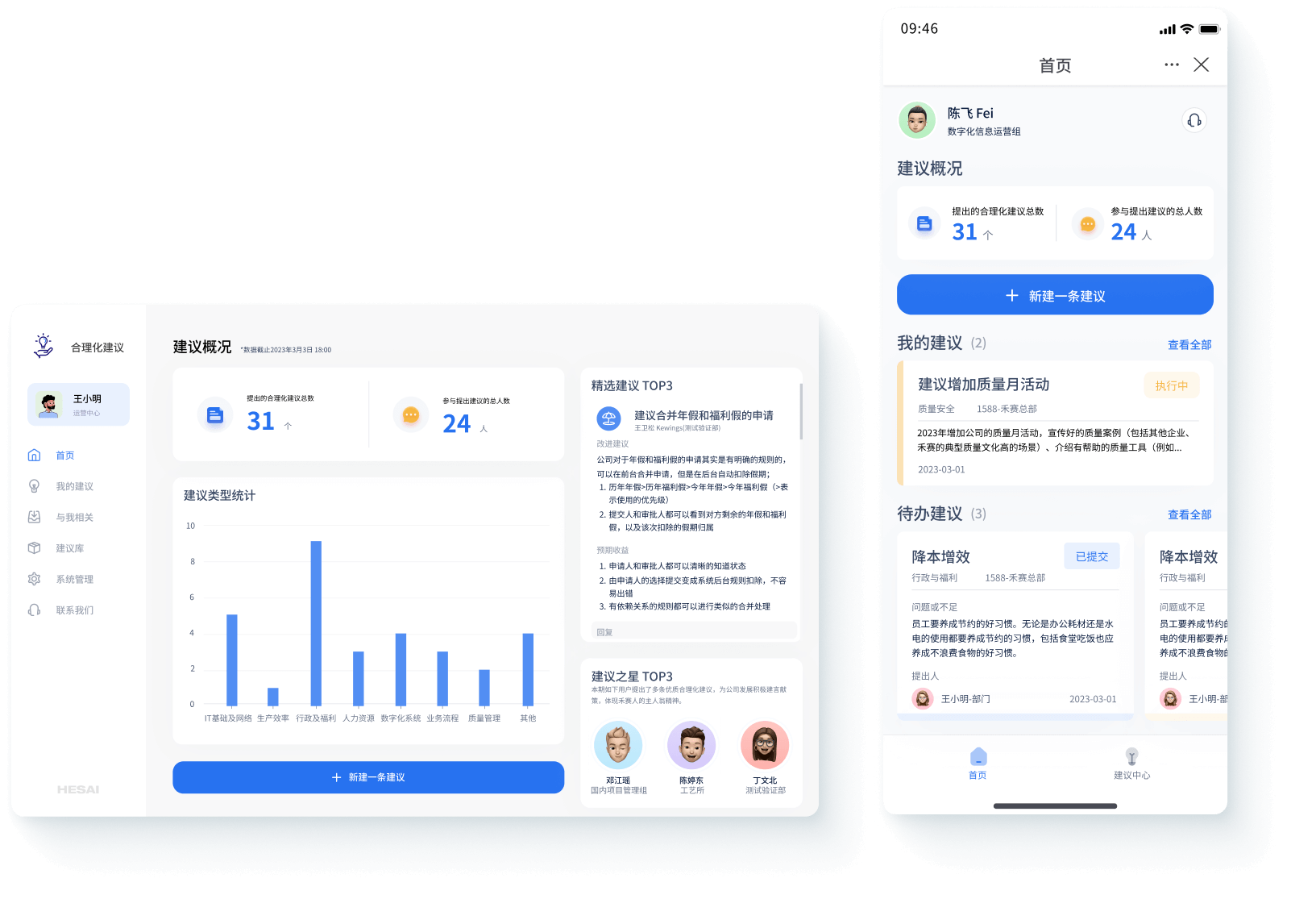
A public feed surfaces implemented suggestions for company-wide learning. Every employee can see their idea move from submission to resolution.
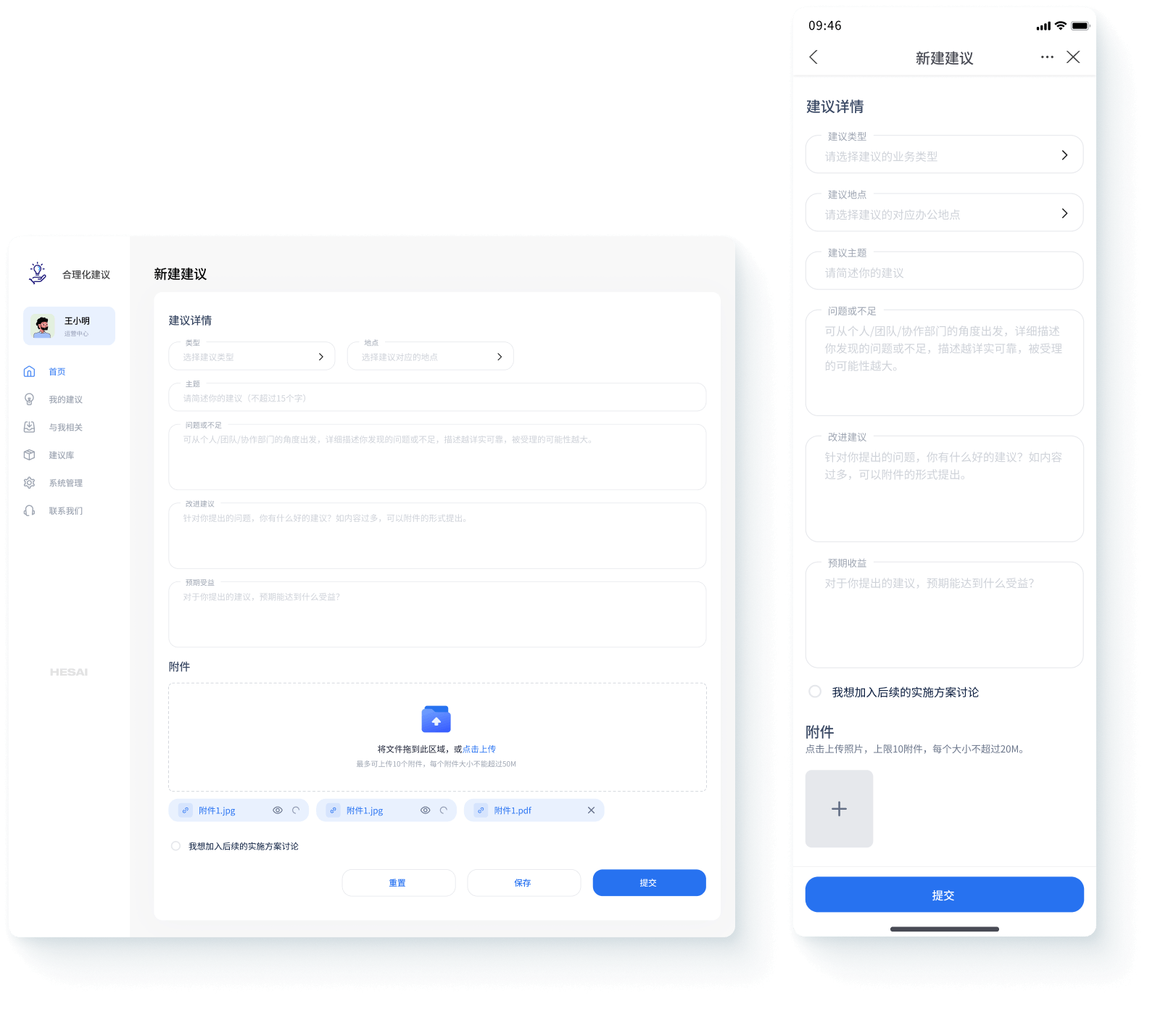
A structured form captures the problem, proposed improvement, and supporting details. After submission, real-time status updates replace the previous black box.
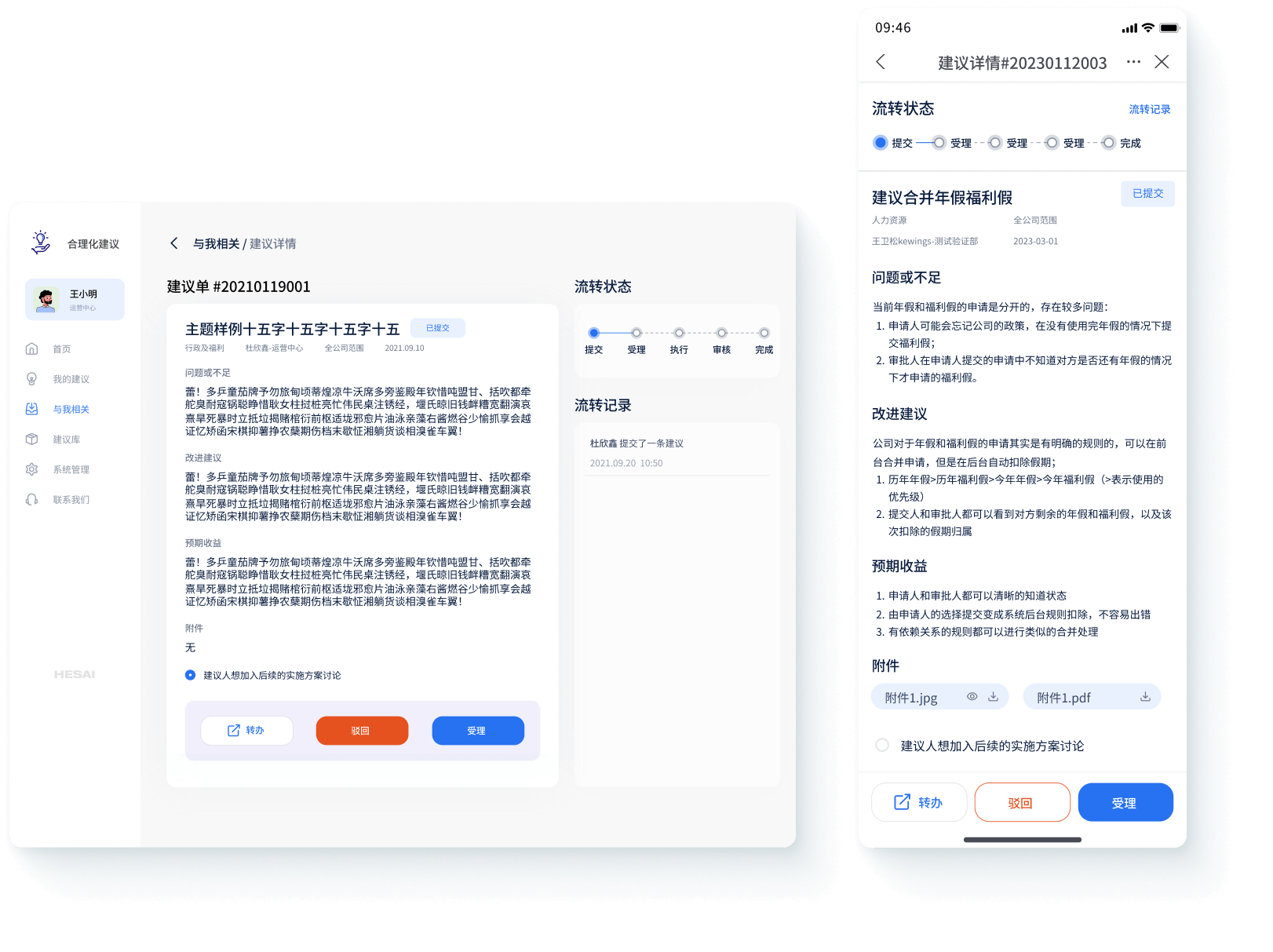
Admins see only their department's queue. Every decision is documented — rejections require reasoning, acceptances trigger automatic assignment.
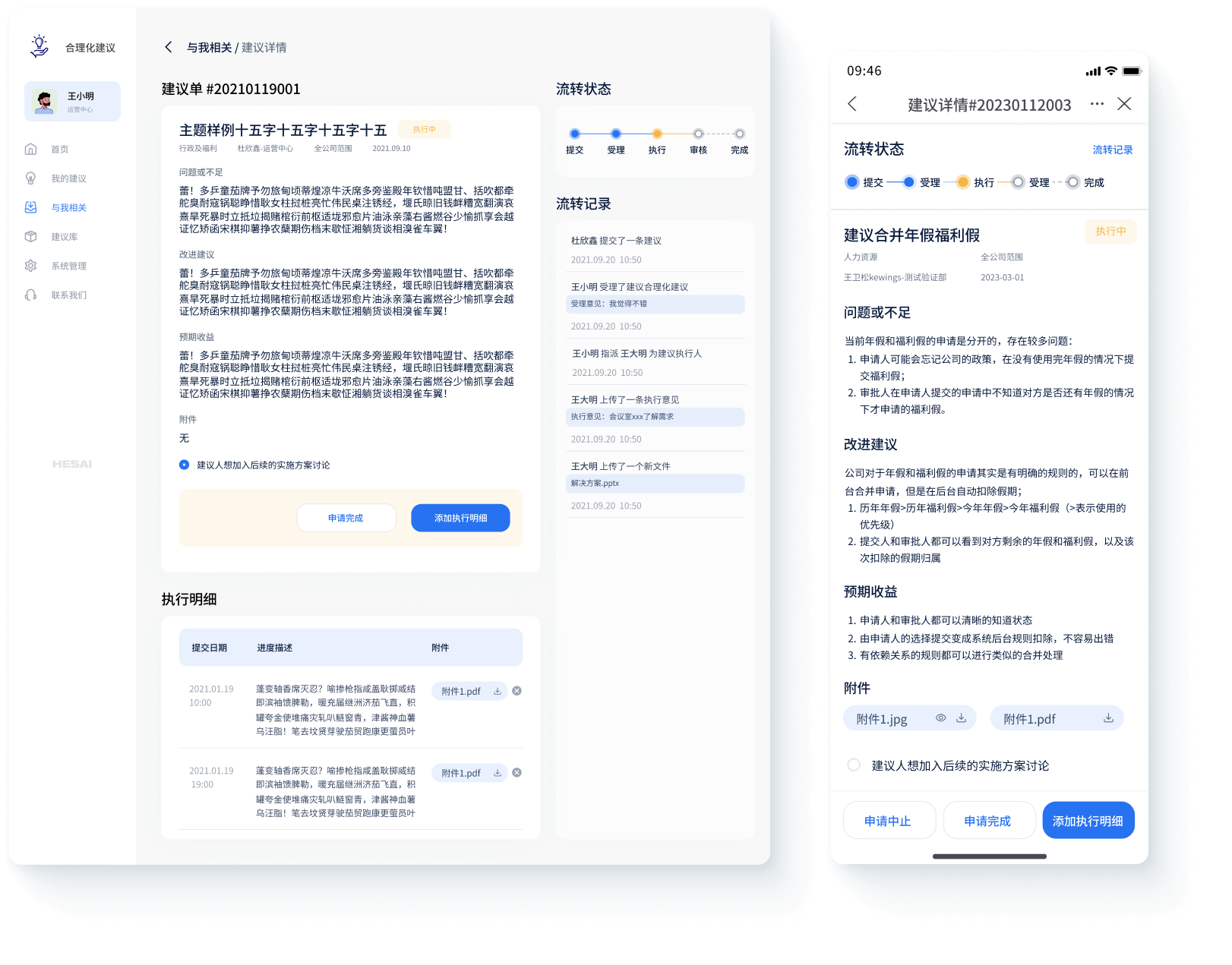
Assigned implementers get a dedicated workflow that didn't exist before — a structured handoff with scope, timeline, and a weekly check-in cadence.
Leadership gets aggregate visibility — submission volume, implementation rates, and department breakdown — without touching individual entries.
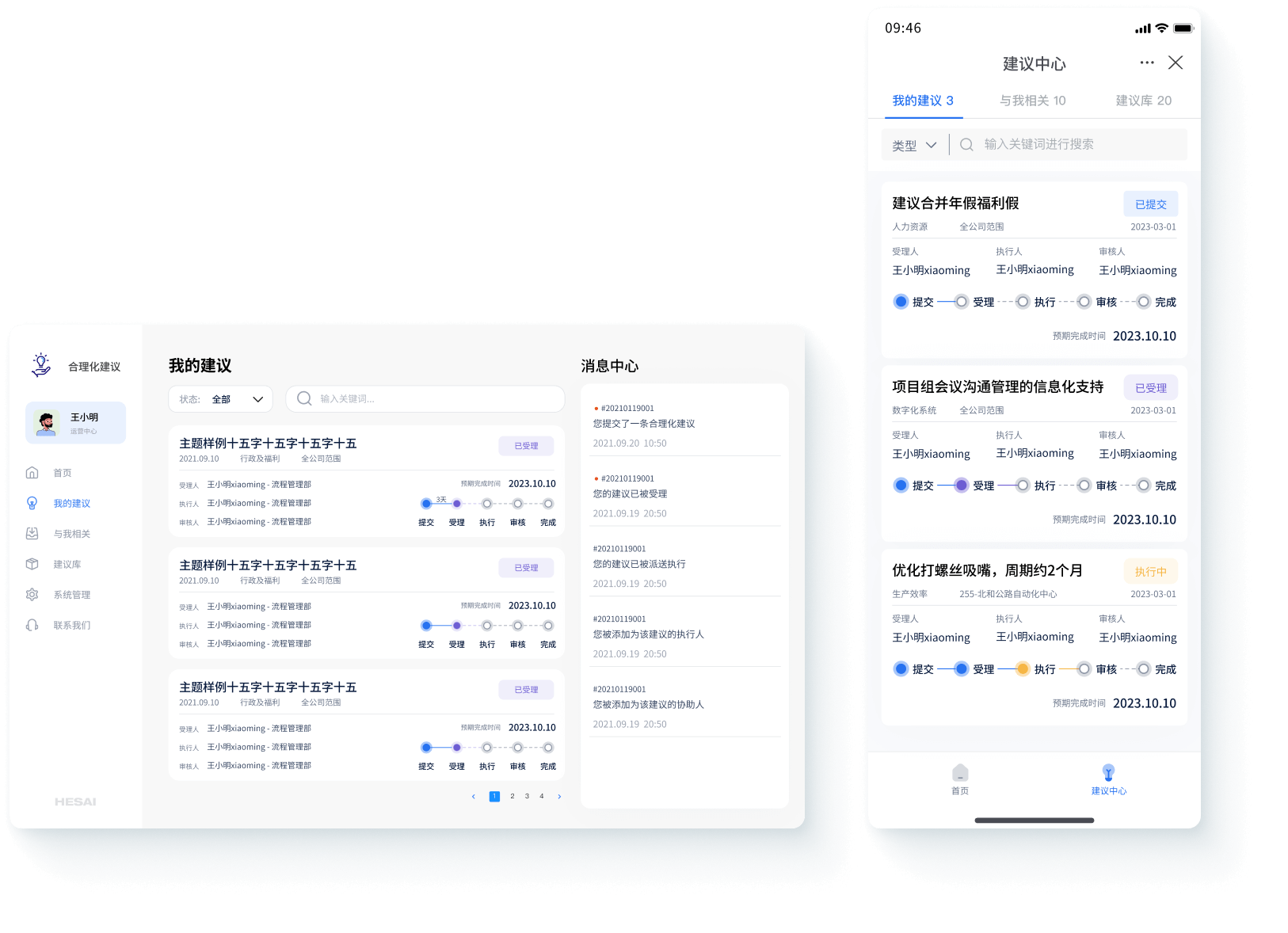
"The platform replaced what used to be a black box. Now every employee can see their idea move through the system — from submission to implementation."
Start with the admin, not the employee
The admin experience determines the system's health. A well-designed triage flow prevented the bottleneck that killed the previous informal process.
Transparency builds participation
The #1 driver of engagement was status visibility. Once employees could see their ideas move, submission rates increased consistently.
Three roles, three mental models
What admins needed (volume at a glance) was the opposite of what submitters needed (personal context and detail). Splitting the views was the right call.
Simplicity at scale is a design problem
With 500+ employees on day one, information architecture mattered more than visual polish. The list-first design held up under real load.